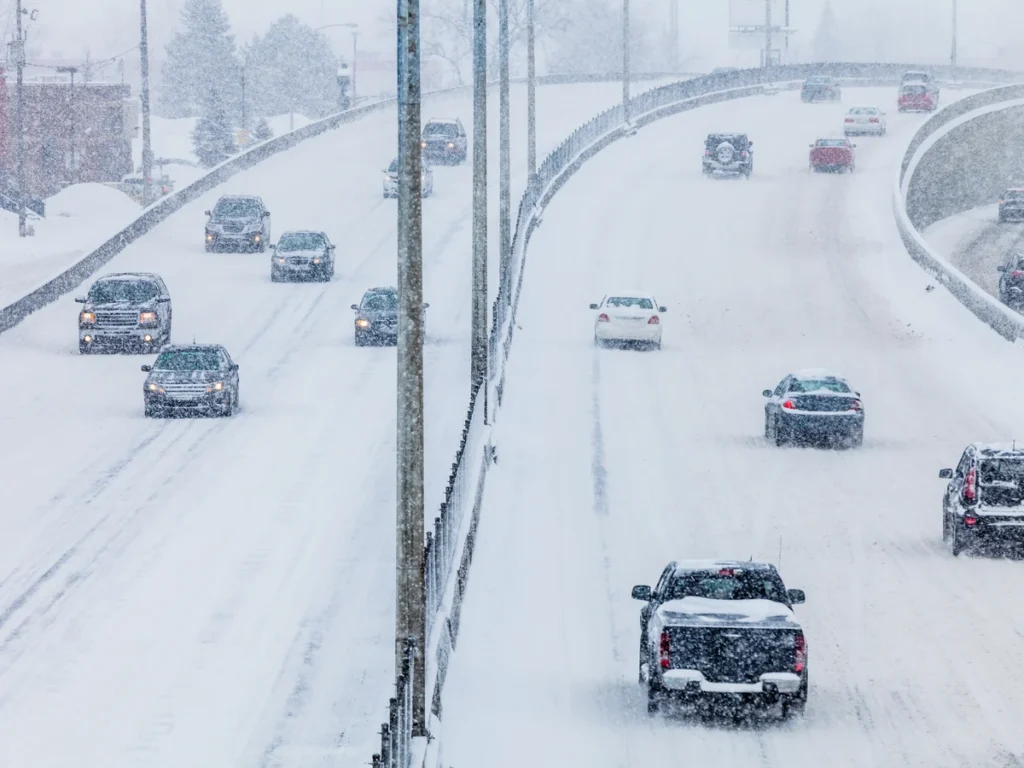
If you drive I-25 between Colorado Springs and Denver, you know the Monument Hill stretch can go from dry pavement to a skating rink in about the time it takes to change lanes. Snow, black ice, and a long line of traffic traveling a little too fast is a recipe for a bad day.
After a winter crash, a lot of people assume nobody is really at fault, because “it was the weather.” That is rarely how the law, or the insurance companies, see it. Here is how fault works when the roads are icy and what to do if you are hurt.
Bad weather does not erase the duty to drive safely
Every driver has a duty to use reasonable care. In winter, reasonable care means adjusting to the conditions. That can mean slowing down well below the posted limit, leaving extra room, braking gently, and sometimes staying off the road altogether. Posted speed limits are for ideal conditions, not for a snowstorm.
When a driver goes too fast for conditions and slides into someone, that driver can be held responsible, even if the road was icy. The ice explains why the car slid. It does not excuse choosing to drive in a way that made a slide likely.
Colorado’s traction law, in plain English
Colorado’s Department of Transportation can activate a passenger vehicle traction law during winter storms or when conditions call for it. Chain and traction laws are in effect each year from September 1 through May 31, and the traction law applies to all state highways, not just I-70. That includes I-25.
When it is active, drivers need appropriate equipment, such as tires with adequate tread and a winter or all-weather rating, or chains or an approved traction device. Four wheel drive or all wheel drive alone is not enough if the tires are worn. Fines go up sharply if a vehicle without the right equipment blocks the road and causes a closure.
Why does this matter for a claim? Because a driver who ignored the traction law, or was riding on bald tires, can look careless when it is time to figure out who caused the crash. That is one more reason to document everything. Our post on Colorado’s new traffic laws for 2026 covers other rules that may come up after a serious crash.
How fault is usually decided in a winter crash
Investigators and insurers look at a handful of questions:
- Was the driver going too fast for the conditions, even if under the speed limit?
- Were they following too closely?
- What kind of tires and equipment did the vehicle have, and what was the tread like?
- Was the traction law or a chain law in effect?
- Did anyone make a sudden lane change, brake hard, or distract themselves?
- Was a plow, sander, or commercial truck involved?
For a closer look at how these questions are answered, see our guide to who is at fault for a car accident.
The black ice defense
Drivers who cause a crash on ice often say the same thing: “I hit a patch of black ice, and there was nothing I could do.” Sometimes that is true. But it is not a magic phrase. If the weather had been icy all morning, or if the driver was going too fast, following too closely, or had poor tires, black ice may not save them. Sudden emergency arguments depend on the facts, and a driver who helped create the emergency by driving carelessly will have a harder time using one.
Multi-car pileups
Winter crashes are often pileups, where several vehicles collide in a chain. That can make fault messy. Different drivers may share responsibility, and the first impact may not be the one that caused your injuries. These cases benefit from early evidence gathering, including photos, witness statements, and the police report.
Commercial trucks add another layer. Trucking companies and drivers have extra duties, including training, maintenance, and following safety rules for winter driving. If a truck was involved in your crash, read about our Colorado truck accident lawyers and how those claims are handled.
When the road itself is part of the problem
Sometimes the issue is not just other drivers. Poorly plowed roads, missed sanding, or a broken signal during a storm can play a role. Claims against a government entity, like a city or the state, are different from claims against a driver, and they come with a short written notice deadline of 182 days. If you think road maintenance contributed to your crash, tell an attorney early, and photograph the conditions as soon as it is safe.
Rentals and out-of-town drivers
Winter visitors are a big part of Colorado traffic. Drivers in rental cars may not be familiar with the traction rules and may not have the right tires. Rental companies are encouraged under recent legislation to tell customers about traction requirements. If the at-fault driver was in a rental, there may be more than one insurance policy involved, so get a photo of the rental agreement and the driver’s details.
Evidence that matters in snow and ice
Winter conditions change fast. Plows come through, snow melts, and the road looks different an hour later. If you are able, collect:
- Photos and video of the road surface, snow, ice, and any signs or warnings
- Pictures of all vehicles, including tires and tread
- The weather report and any CDOT traction law alerts for that day and time
- Dash cam footage, if you have it
- Names and contact information for witnesses
- The police report number
Your own share of the blame
Insurers know winter conditions give them a way to point at everyone, including you. Colorado uses modified comparative fault, so if you are found partly at fault, your compensation can be reduced, and if you are 50 percent or more at fault, you cannot recover. Even a small percentage can add up. We explain how this works in understanding comparative negligence and how it impacts your case.
What to do after a winter crash
- Get to a safe place and call 911. Stay in your vehicle if it is not safe to get out on an icy highway.
- Turn on hazard lights and, if you can, put out flares or reflective triangles.
- Report the crash and ask for a police report.
- See a doctor even if you feel fine. Winter crashes can cause whiplash and concussions that show up later.
- Notify your insurance company, and be careful with recorded statements.
How long do you have?
For motor vehicle injury claims in Colorado, the deadline to file a lawsuit is generally three years from the date of the crash. Insurance policies may require notice much sooner, so report it right away.
If you were injured in a winter crash on I-25 or anywhere around Colorado Springs, the attorneys at Rector Stuzynski Law Firm can help you sort out fault, coverage, and next steps.
This article is general information, not legal advice, and every case is different.
Frequently Asked Questions
Can I still be at fault in a crash caused by black ice?
Yes. Drivers have to adjust their speed, following distance, and equipment to the conditions. If a driver was careless for the conditions, ice does not wipe out their responsibility.
Does Colorado’s traction law apply to I-25?
It can. CDOT can activate the traction law on state highways, and it applies whenever it is in effect. Chain and traction laws run each year from September 1 through May 31.
Does all wheel drive mean I meet the traction law?
Not by itself. Your vehicle also needs tires with adequate tread and the right rating, or chains or an approved traction device.
What if I was hit by a plow or sander truck?
You may still have a claim, but claims involving government vehicles have a short notice deadline of 182 days. Talk to an attorney as soon as possible.
Should I go to the doctor if I feel fine after a snowy crash?
Yes. Injuries like whiplash and concussions can show up hours or days later, and medical records help connect them to the crash.
How long do I have to file a lawsuit after a winter car accident?
Generally three years in Colorado for a motor vehicle crash. Insurance notice requirements can be shorter, so report the crash promptly.