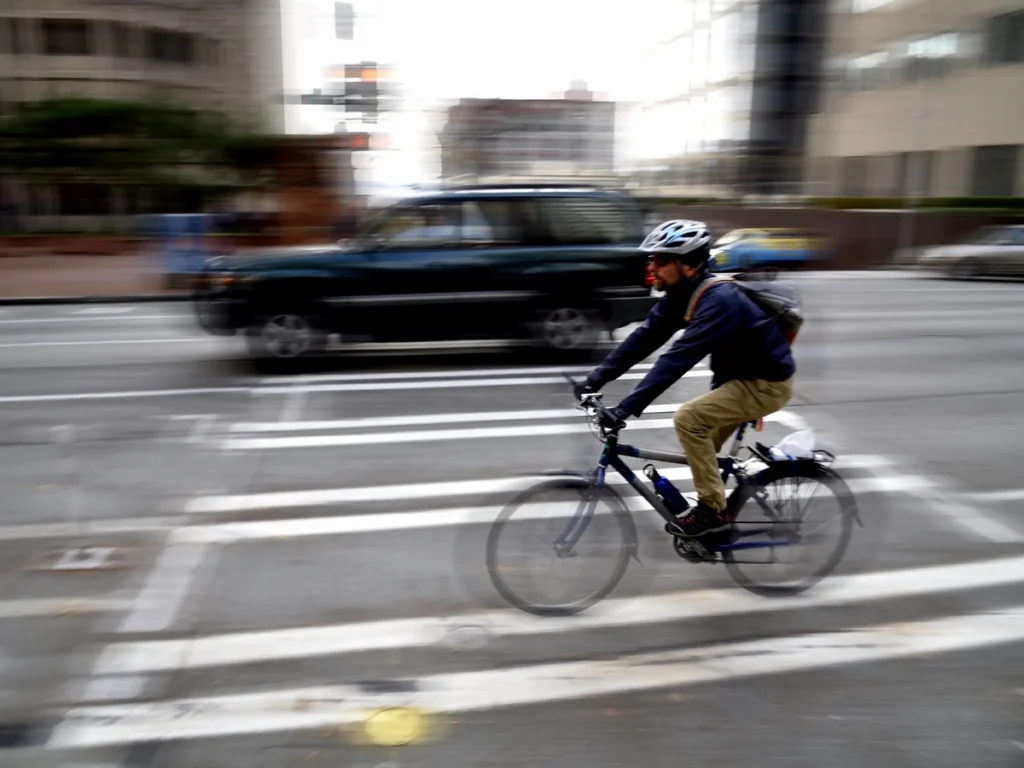
Colorado Springs is a great place to ride a bike. Between the trails, the bike lanes, and the mountain views, it is easy to see why so many people ride. It is also a place where cars and bikes share a lot of pavement, and when they collide, the cyclist almost always loses.
If you were hurt on your bike, you may be dealing with injuries, a wrecked bike, and a driver who says they never saw you. Here is what Colorado law says about cyclists’ rights, what to do after a crash, and how a claim usually works.
In Colorado, a bike is a vehicle
This is the foundation of everything. Under Colorado law, a person riding a bicycle has the same rights and duties as the driver of a vehicle. That means cyclists can ride on the road, and drivers have to treat them like any other traffic. It also means cyclists have to follow the rules of the road, like signaling, riding in the right direction, and yielding when required.
The three foot rule
Colorado requires drivers to leave at least three feet between their vehicle and a cyclist when passing. That distance includes mirrors and anything else sticking out from the side of the vehicle. Drivers are also allowed to cross the center line to give that space, as long as it is safe to do so. In other words, “there was not enough room” is not an excuse. If a driver cannot pass safely, they need to wait.
Unsafe passing is one of the most common causes of bicycle crashes, and it often leaves a mark in the evidence, like a mirror strike or a witness who saw how close the car came.
The Safety Stop law
Since April 2022, Colorado has had a Safety Stop law that lets cyclists treat stop signs as yield signs, and red lights as stop signs, in certain conditions. The details matter, and local rules can add layers, so a rolling stop is not always a violation anymore. Insurance adjusters sometimes try to blame cyclists for a crash by pointing to a “failure to stop,” so it helps to know the law before anyone argues about it.
Lights and visibility at night
If you ride after dark, Colorado requires a white front light visible from at least 500 feet and a red rear reflector visible from at least 600 feet. A rear light is a smart extra. If you were riding at night and had the right equipment, say so in your report. It shows you were following the rules.
Common causes of bicycle crashes
- Drivers who fail to yield when turning left across a cyclist’s path
- Right hook crashes, where a driver turns right across a bike lane
- Unsafe passing with less than three feet of space
- Drivers opening a car door into a bike lane
- Distracted driving, including phones
- Drivers pulling out of driveways or parking lots without looking
New traffic laws can also change the picture. Our post on Colorado’s new traffic laws for 2026 covers updates that may affect how fault is argued after a crash.
What to do after a bike crash
- Call 911 and get medical attention, even if you think you are okay. Head injuries and internal injuries are not always obvious.
- Ask the police to complete a report. Colorado law lets you request one for an injury crash involving a bicycle.
- Take photos of the scene, the car, your bike, and your injuries.
- Collect names and contact information for the driver and any witnesses.
- Keep your helmet, clothing, and bike as they are. Do not repair or throw out anything until your claim is resolved.
- Be careful what you say to insurance adjusters, and avoid guessing about speed, distance, or fault.
Cyclists get hurt differently
A cyclist has no seatbelt, no airbags, and no metal frame. Typical injuries include broken bones, road rash, head injuries, and spinal injuries, and recovery can take a long time. If you have been through something similar as a pedestrian, our post on Colorado pedestrian accidents shares some of the same challenges for people who are hit while outside a vehicle.
Crashes on trails and paths
Not every bike crash involves a car on a busy street. The Pikes Peak region has plenty of shared paths and trails, and crashes there can involve poor maintenance, debris, unmarked hazards, or other riders. Who is responsible depends on who owns and maintains the path, and claims against a city or other public entity come with a short written notice deadline of 182 days. If you were hurt because of a defect, report it and photograph the hazard as soon as you can.
E-bikes
E-bikes are everywhere now. The basics above still apply, but different classes of e-bikes come with different rules, including where they can be ridden, so the details can matter after a crash. Keep the bike, the battery, and any app data as they are, because they may turn into evidence.
When the driver says it was your fault
It is common for a driver to say, “They came out of nowhere.” Do not argue at the scene, but do not agree either. Ask for the police report, collect witness names, and look for cameras. Most of the time the physical evidence, like where the bike and car ended up and the damage to each, tells a different story than the driver’s first version.
Who pays after a bicycle crash?
Most often the answer is the driver’s auto insurance, through their liability coverage. If the driver has no insurance or too little, your own uninsured and underinsured motorist coverage may help, since it can apply to you as a cyclist depending on the policy. Your health insurance may cover treatment while the claim moves along, and some policies include medical payments coverage too.
Expect the blame game
Insurance companies sometimes try to put some of the blame on the cyclist. Maybe you were not in the bike lane, maybe you ran a stop sign, maybe you were hard to see. Colorado uses modified comparative fault. If you are partly to blame, your compensation can be reduced, and if you are 50 percent or more at fault, you cannot recover. Our post on comparative negligence explains this rule, and our page on who is at fault for a car accident shows how fault gets proven.
What you may be able to recover
Depending on your case, you may be able to pursue compensation for medical bills, lost income, damage to your bike and gear, future treatment, and pain and suffering. The value depends on the facts, and an insurer’s first offer is rarely the full picture.
How long do you have?
A crash between a bicycle and a motor vehicle is generally treated as a motor vehicle accident, which carries a three year deadline to file a lawsuit in Colorado. Insurance policies and government notice rules can be shorter, so do not wait.
If you were hurt on your bike in Colorado Springs or anywhere in the Pikes Peak region, the attorneys at Rector Stuzynski Law Firm are happy to talk through what happened and what your options look like.
This article is general information, not legal advice, and every case is different.
Frequently Asked Questions
Do cyclists have the same rights as drivers in Colorado?
Yes. Under Colorado law, people riding bicycles have the same rights and duties as drivers of other vehicles, which means they can use the road and must follow the rules of the road.
How much space does a driver have to give a cyclist?
At least three feet when passing, measured from any part of the vehicle, including mirrors. Drivers may cross the center line to provide that space when it is safe.
What if I did not see the driver and they did not stop?
That is a hit and run, and you may still have options through your own uninsured motorist coverage. Report the crash right away and collect any evidence you can.
Can I still recover if I was partly at fault?
Possibly. In Colorado, your compensation can be reduced by your share of fault, but you are barred from recovering if you are 50 percent or more at fault.
Should I get my bike repaired before my claim is done?
Wait. Your bike is evidence. Photograph it, keep it as is, and let your attorney or insurer know before you repair or replace it.
How long do I have to file a bicycle accident lawsuit in Colorado?
Generally three years when a motor vehicle was involved. Insurance notice rules and claims against government entities can have much shorter deadlines.